
Workshop practice
Watch Repair Workflow: Intake to Handover
A watch comes in because it stops overnight. You inspect it, send an estimate and put it aside while you wait for approval. A week later the customer replies. Can you tell which work was approved, what you measured at intake and what needs doing next without opening three different notebooks? That is what a good repair record is for.
1. Give the watch and its parts one job number
Record the brand, model or reference, and any identifying numbers you can verify. Photograph the watch as received, especially existing damage, and note what came with it: bracelet, spare links, box or paperwork. Record the customer’s description separately from your diagnosis. “Stops overnight” is what the customer reported; it isn’t a finding.
2. Keep the approved estimate with the job
Write down the proposed work, the price and anything that may change the scope. Save the version the customer actually approved and when they approved it. If you later find work outside that scope, record the change and obtain approval before treating it as authorised. Give the job a clear next action, such as “awaiting approval” or “waiting for mainspring”, so a pause doesn’t look like progress.
3. Record what changed at the bench
A service checklist shows what is complete; the job notes explain anything out of the ordinary. When replacing a part, record what you used and why. Leave a brief note when you set the work aside: “New mainspring fitted; final testing still to do” is more useful when you return than just “in progress”.
4. Keep intake and final readings comparable
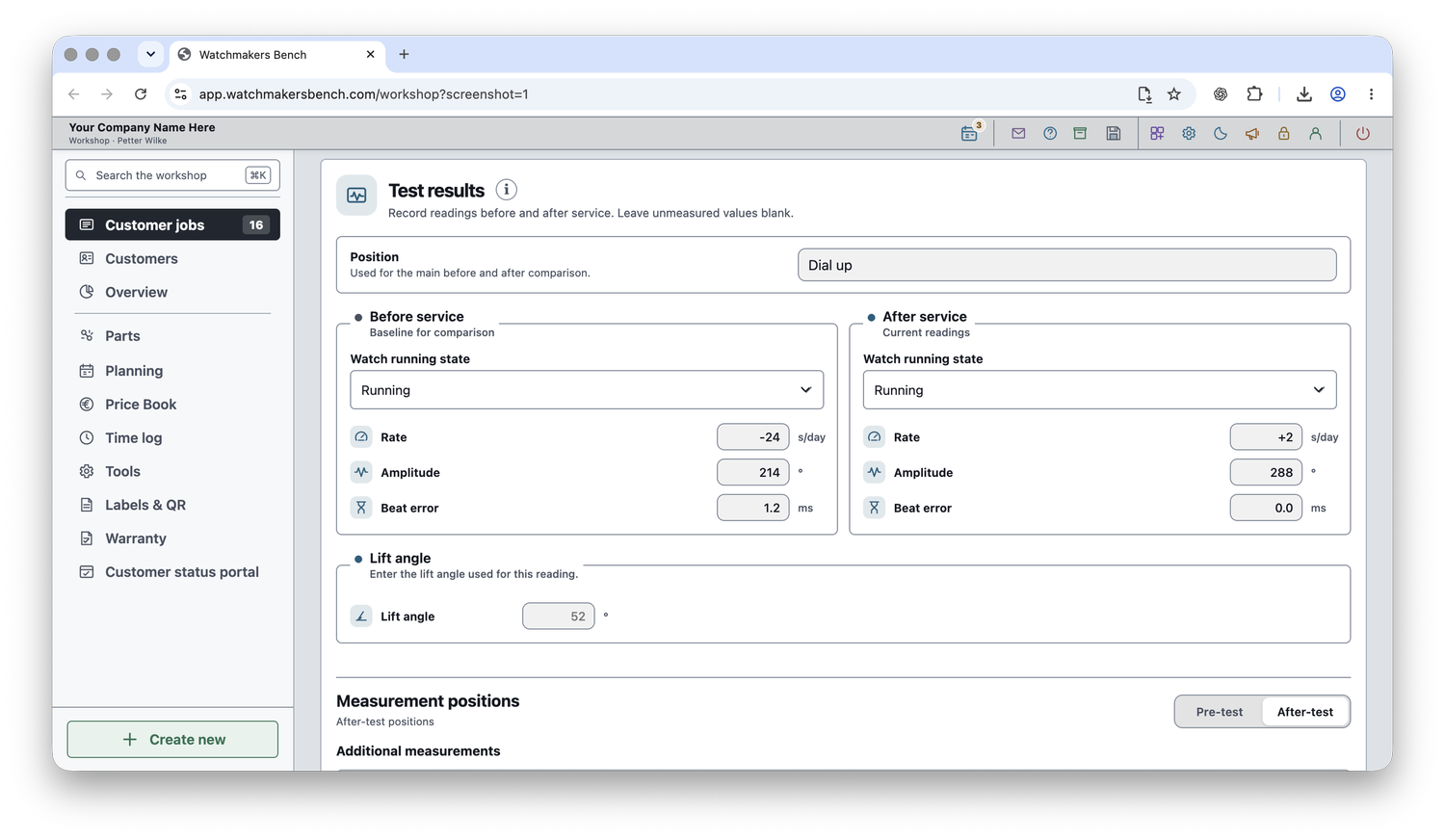
When you take timing readings, record the conditions alongside the result: position, state of wind and lift-angle setting where relevant. Compare like with like. A before-and-after example might show rate changing from −24 to +2 seconds per day, amplitude from 214° to 288°, and beat error from 1.2 to 0.0 ms. Those figures illustrate how to record a change; they are not pass limits. Use the checks appropriate to the movement and work carried out.
5. Leave a handover record you can use next year
Keep the work performed, final checks, handover date and any warranty terms together. If the same watch returns, you can see which parts were fitted, how it tested and what was agreed. Keep customer-facing notes concise and keep internal observations separate where appropriate.
A short watch repair intake checklist
- Job number on the record and the physical tag.
- Customer’s description, watch identification and received accessories.
- Condition notes and intake photographs.
- Initial checks and readings where appropriate.
- Next action and who is responsible for it.
In Watchmakers Bench Studio, the watch, customer, work order, service steps and timing results stay together in the job record. See the web app features or compare Free and Pro.